Graph Engineering is an old idea reborn
From state machines and chatbots to agentic circuits…why structured autonomy keeps returning

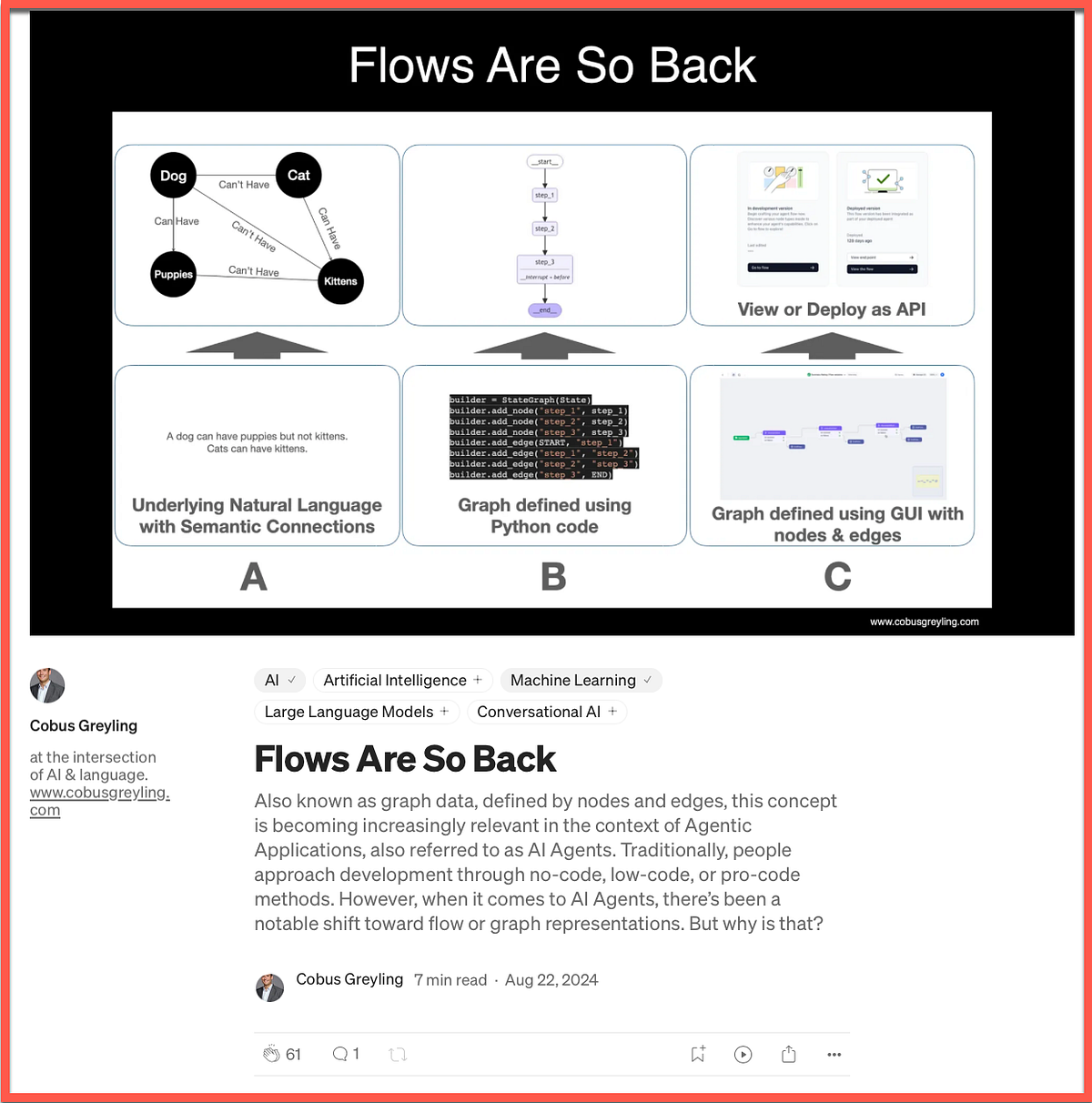
OK, So I have been looking at the recent trend of graph engineering, and to a certain extent it amuses me…I wrote about it a year ago…
The whole idea of graphs has been around for quite a while. LangChain recently published a blog noting that they implemented graph engineering three to four years ago already. But for some or other reason now it is all the rage…
It is interesting how an old principle resurfaces.
The first time I dealt with graphs was in the IBM WebSphere Voice Response system, which used something called state tables.

You can think of each state as a node within a graph. The process or conversation moved from state to state, with the transition determined by a decision point at the edge of that state.
This same principle is common in manufacturing with PLCs (programmable logic controllers), where a state-machine approach governs the flow from one state to the next.
In the old chatbot world, before large language models, the only non-deterministic element of a traditional chatbot was the NLU/NLP model.
Apart from that, the entire conversation flow was a graph…nodes connected by edges.
Fast forward to the introduction of generative AI. Those nodes no longer served only as action or decision points. They acquired a degree of agency and eventually became limited, specialised AI agents…the nodes that is.
The edges or links between them remained. This is how many chatbot frameworks first introduced generative AI and large language models.
When fully autonomous AI agents arrived, there was a strong notion that the graph approach could be shed like an old skin.
Dialog Management Considerations for Chatbots
Chatbot User Experience is Determined by Dialog Management Efficiencycobusgreyling.medium.com
Everything would happen on the fly: the agent would create the sequence of events (or the graph itself) and simply execute it. The graph became ephemeral, created on the fly and then discarded.
I first encountered this idea through LangChain research a few years before it entered the mainstream.
The promise was that state machines and graph engineering would be deprecated in favour of a fully autonomous agent that decomposes tasks on the fly into sub-steps and executes them sequentially.
It was quickly realised that this is not always ideal.
Some form of agentic circuit is often required…what might be called “AI on rails” or bounded autonomy.
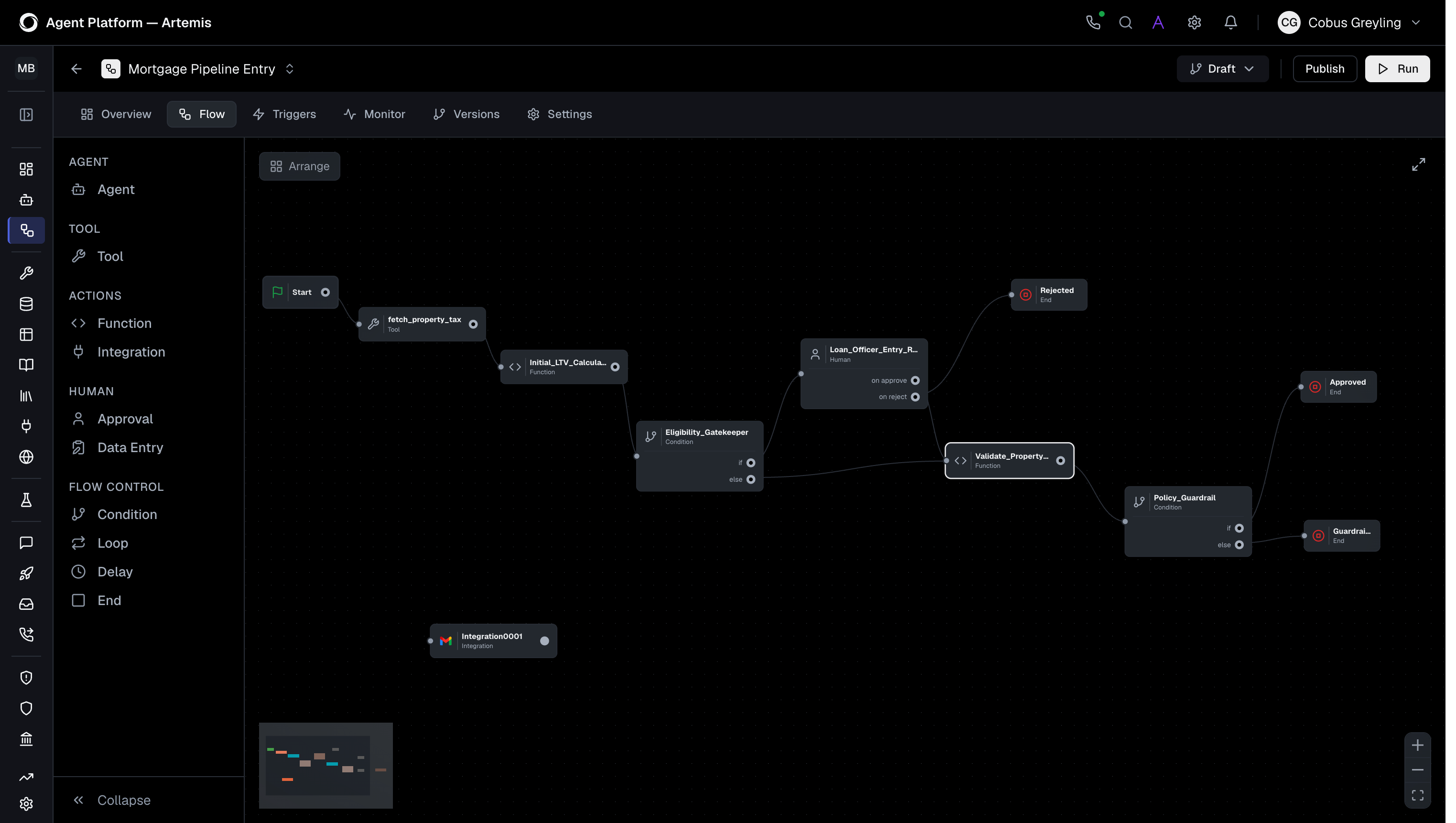
You still build a graph, but each node functions as a mini-agent with a specific degree of autonomy suited to its place in the network.
Traditional chatbot frameworks largely adopted this model: they kept the graph structure while lending meaningful autonomy to each node.
Today we find many people “discovering” graph engineering and building agentic circuits for their applications. In reality the idea has been around for a long time. It is simply an old principle that has been reborn and has resurfaced with new relevance.
COBUS GREYLING - At the intersection of AI & Language
Cobus Greyling is an AI Evangelist & thought leader dedicated to exploring the intersection of artificial intelligence…www.cobusgreyling.com